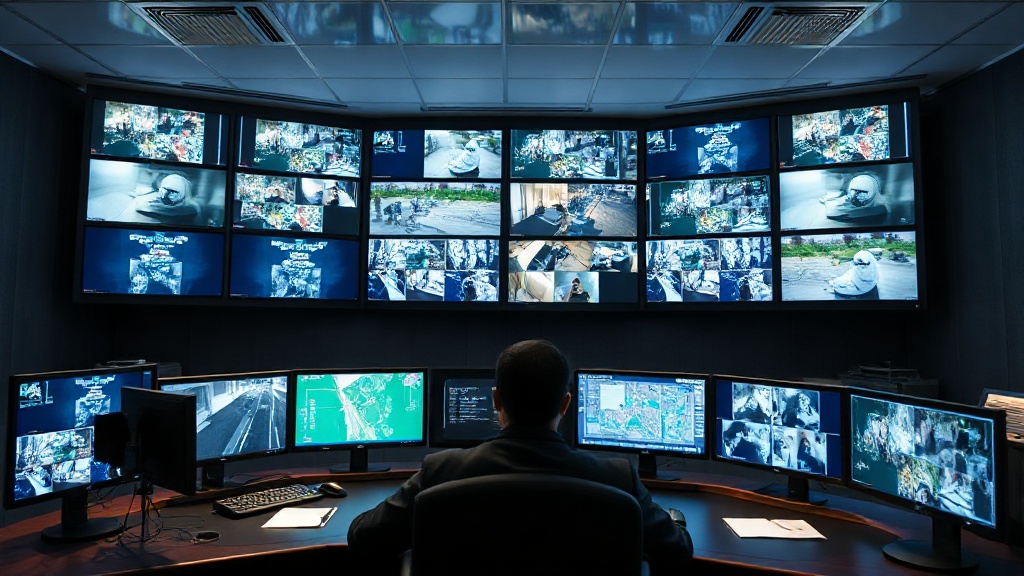
A central-station monitoring firm or a surveillance company is, whether it thinks of itself this way or not, one of the most sensitive data custodians in any community it serves. You do not just watch buildings — you hold the keys to them. Alarm codes, disarm credentials, access-control databases, camera feeds, recorded footage, floor plans, and the schedules of when properties are empty all live on your systems. That is an extraordinary concentration of exactly the information a criminal most wants to steal. Which is why cyber liability is not an optional add-on for monitoring and surveillance firms. It is core coverage.
The Data You Hold Is the Target
Most businesses worry about losing customer names and credit cards. A monitoring firm's exposure is far more severe, because the data itself is operationally dangerous in the wrong hands:
- Alarm codes and disarm credentials — a breach can literally tell a thief how to turn off the system protecting a property
- Access-control credentials and key data — door codes, badge databases, and entry permissions
- Live and recorded video footage — sensitive imagery of homes, businesses, employees, and customers
- Account and premises information — addresses, contacts, floor plans, and when locations are unoccupied
- Customer personal and payment data — the usual PII and billing details, on top of everything above
If this information leaks, the harm is not abstract. It can enable physical break-ins, expose customers to surveillance and stalking, and trigger serious privacy claims. The stakes are higher for your industry than for almost any other small business.
Connected Cameras Are a Favorite Attack Surface
Networked cameras, recorders, and IoT security devices are notoriously targeted. They are internet-connected, frequently shipped with weak default credentials, and often left unpatched in the field. Attackers hunt for them to:
- Recruit them into botnets used for large-scale attacks
- Pivot from a compromised camera into the broader customer or monitoring network
- Hijack live feeds to spy on premises or to confirm when a location is empty
- Deploy ransomware that locks up the very systems your operations and your customers depend on
For a monitoring center, a ransomware event is uniquely catastrophic: if your station goes dark, every account you watch is effectively unprotected until you recover. That is both an operational emergency and a liability minefield.
What Cyber Liability Actually Covers
A well-structured cyber liability policy responds to both the immediate incident and the fallout that follows. Coverage generally splits into two halves.
First-Party Coverage — Your Own Costs
- Breach response — forensic investigation to determine what happened and what was exposed
- Notification costs — telling affected customers and meeting legal notification requirements
- Ransomware and cyber extortion — negotiation, and where appropriate, payment, plus recovery
- Business interruption — lost income when an attack takes your systems or monitoring operations offline
- Data restoration — rebuilding corrupted or destroyed footage, databases, and systems
- Credit monitoring — services offered to affected individuals
Third-Party Coverage — Claims Against You
- Privacy liability — lawsuits from customers whose footage, codes, or personal data were exposed
- Regulatory defense and penalties — responses to state and federal privacy regulators, where insurable
- Media and content liability — claims arising from data you publish or transmit
- Defense costs — attorneys and experts to fight claims, even ones without merit
For a firm holding alarm codes and footage, the third-party privacy exposure is especially significant. The customers harmed by a breach of your systems are not just inconvenienced — they may be put at physical risk, and they will look to you.
Why This Risk Doesn't Live in Your Other Policies
Owners sometimes assume general liability or their property policy will respond to a hack. Generally, they will not. Standard GL is built for bodily injury and physical property damage, and many policies now carry explicit cyber and data exclusions. A breach of digital data, a ransomware lockout, or a privacy lawsuit falls squarely outside those policies. Cyber liability exists precisely because the older coverages were never designed for this risk.
Reducing the Risk — and the Premium
Carriers increasingly reward firms that demonstrate good security hygiene, and the same practices that lower your premium also lower your odds of a claim:
- Enforce multi-factor authentication on remote access and admin accounts
- Change default credentials on every camera, recorder, and device, and patch firmware on a schedule
- Segment customer-facing devices from your core monitoring network
- Encrypt sensitive data at rest and in transit, and restrict who can access codes and footage
- Maintain tested, offline backups so ransomware cannot hold your operations hostage
- Train staff to recognize phishing — still the most common entry point
Strong controls plus the right policy is the combination that keeps a breach from becoming a business-ending event.
Protect the Firm That Protects Everyone Else
You spend your days making sure your customers' properties are safe. Cyber liability makes sure that when an attacker comes for the data behind that protection, your business can absorb the hit, respond properly, and keep its accounts covered.
We specialize in insuring monitoring centers and surveillance firms and understand the unique exposure that comes with holding codes, credentials, and footage. Call 844-967-5247 or request a quote and let us build cyber coverage sized to the real risk your firm carries.