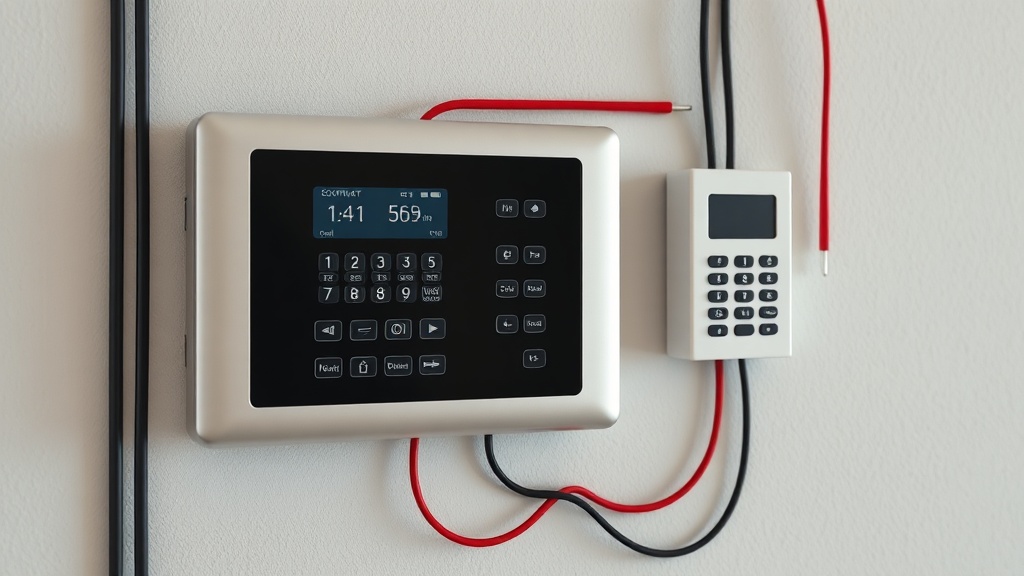
Ask any seasoned alarm dealer or CCTV integrator what keeps them up at night, and it usually is not a slip-and-fall. It is the phone call that starts with: "Our store was broken into last night, and your system didn't stop it." For security companies, the single largest liability exposure is not the kind general liability was built to handle. It is the claim that your professional work failed. That is what professional liability — errors and omissions (E&O) — is for, and why no alarm or surveillance business should operate without it.
Why General Liability Leaves You Exposed
General liability is a vital policy. It covers third-party bodily injury and property damage — a customer tripping over your equipment, a drill bit puncturing a pipe. But GL contains exclusions that gut its usefulness for the core risk of this industry. It does not respond when the allegation is that your services, advice, design, or installation were professionally deficient and the customer suffered an economic loss as a result.
In other words, the exact lawsuit a security company is most likely to face — "your system or your monitoring didn't do its job" — is the lawsuit GL is least likely to cover. That gap is precisely where E&O lives.
The Two Claims That Define This Industry
Failure-to-Detect Lawsuits
This is the signature claim against alarm and monitoring companies. A break-in, fire, robbery, or other loss occurs. The customer alleges that:
- The alarm did not trigger, or triggered and was not acted on
- The central station missed the signal, dismissed it, or failed to dispatch
- The cameras that were supposed to capture the incident were down, misaimed, or not recording
- The system was armed incorrectly, or a known fault was never resolved
The customer then sues for the full value of what they lost — stolen inventory, fire damage, a business that never reopened. These numbers dwarf the value of the service contract that generated them. A monitoring agreement worth a few thousand dollars a year can produce a claim for hundreds of thousands. Without E&O, you are paying defense costs and any judgment out of the company's own pocket.
Faulty-Installation and Design Claims
The second category alleges the system was wrong from the start: under-specified for the threat, installed incorrectly, programmed with the wrong zones, or integrated in a way that created blind spots. Even when the equipment performed exactly as built, the customer argues it should never have been built that way. E&O responds to these professional-judgment disputes; GL generally does not.
E&O Is Necessary — But Contracts Are Your First Line of Defense
Insurance pays claims. Contracts decide whether the claim exists at all. The most financially significant thing many security companies can do is tighten their customer agreements. Two clauses matter most.
Limitation-of-Liability Clauses
A well-drafted limitation-of-liability clause caps your potential exposure to a defined amount — often the value of the service contract or a fixed sum — rather than the open-ended value of whatever the customer lost. Courts in many jurisdictions enforce these clauses in alarm and monitoring contracts, and they are routine in the industry for good reason. A break-in that costs the customer $500,000 should not translate into a $500,000 claim against a company that was paid $1,200 a year to watch the panel.
Disclaimers and Scope Clarity
Strong contracts also make clear that an alarm or surveillance system reduces risk but does not guarantee prevention of loss. They define exactly what you are responsible for, what response the customer can expect, and what falls outside your scope. Ambiguity is what plaintiffs' attorneys exploit; precision is what protects you.
The key point: insurance and contract language work together. A limitation-of-liability clause shrinks the claim; E&O covers what remains and pays to defend you even when the claim is meritless. Defense costs alone — expert witnesses, attorneys, depositions over whether a signal was processed correctly — can run into six figures regardless of who eventually wins.
What Good E&O Coverage Includes
When evaluating professional liability for an alarm or CCTV company, look for:
- Coverage tailored to electronic security work — failure-to-detect and faulty-install allegations specifically contemplated, not generic professional services language
- Defense costs inside or outside the limit, and clarity on which
- Adequate limits relative to the size and value of the accounts you protect
- Central-station and UL-listed monitoring context addressed if you do monitoring
- Blended GL + E&O programs where available, so coverage disputes between two carriers do not leave you stranded
Don't Wait for the Phone Call
The break-in has already happened by the time the lawsuit arrives. The protection has to be in place beforehand — the right E&O policy, backed by contracts with enforceable limitation-of-liability clauses. Get both right, and a failure-to-detect claim becomes a manageable event instead of an existential one.
We focus on the security and surveillance niche and understand exactly how these claims unfold. Call 844-967-5247 or request a quote and let us make sure your professional liability and your contracts are doing their jobs together.