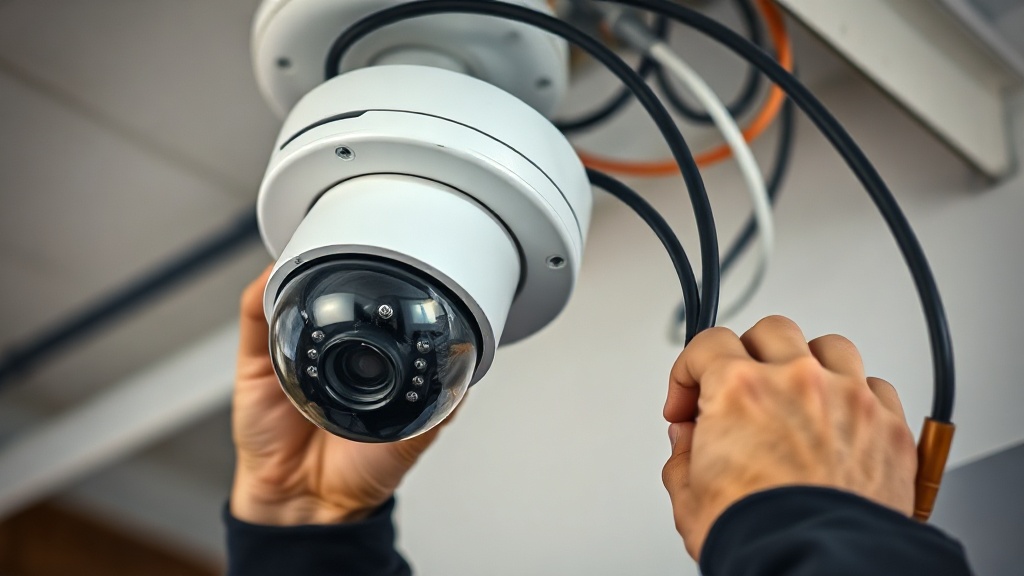
Picture a typical week for a security integrator. On Monday, two pallets of cameras, NVRs, access-control panels, and spools of cable leave your warehouse in a van. By Tuesday, most of it is staged inside a half-finished commercial building, waiting for the crew to mount and terminate it over the next several days. The job will not be finished — and the customer will not formally accept it — until Friday.
Now ask a simple question: from Monday to Friday, who is paying if that equipment is stolen, damaged in a fire, or destroyed by water? For a lot of integrators, the honest answer is "I have no idea," and the reason is that this exact window falls into a gap that two of their most important policies do not cover.
The Gap Nobody Notices Until a Loss
Two coverages most security businesses already carry seem like they should handle this — and both fall short.
- Commercial property insurance covers your building and the contents at your premises. Once the cameras leave your warehouse, they are usually outside that policy's protection.
- General liability covers damage to other people's property, not your own materials. Your own gear is specifically not what GL is for.
So the equipment is no longer at your location (property gap) and it is your own property (GL gap). For the days or weeks between leaving the shelf and being accepted by the customer, that high-value inventory can sit effectively uninsured. The installation floater — sometimes called installation insurance or an installation float — is the policy built specifically to close that gap.
What an Installation Floater Actually Covers
An installation floater is a type of inland marine policy designed to protect materials and equipment you are installing for a customer. Coverage typically applies:
- In transit — while the gear is in your vehicle or otherwise being moved to the job site
- At the job site — while it is staged, stored, or partially installed but not yet complete
- Until acceptance — coverage runs until the installation is finished and the customer formally takes it over (after which it becomes their property to insure)
For a security integrator, the protected property is exactly the expensive, theft-prone gear you handle every day:
- Cameras, NVRs, and DVRs
- Alarm and access-control panels
- Wiring, conduit, connectors, and mounting hardware
- Servers, switches, and head-end equipment
- Other materials and supplies destined for the install
Covered causes of loss usually include theft, fire, vandalism, water damage, and many transit accidents — the everyday risks that turn a profitable job into a loss.
Why Security Integrators Are Especially Exposed
Most trades stage relatively cheap, bulky materials. Security work is the opposite: you carry dense, high-value, easily resold electronics into buildings that are often under construction, frequently unsecured, and full of other trades coming and going. A single van load can represent more value than many trades' entire material order for a whole project. That combination — high value, high portability, low-security environments — makes theft from job sites a genuine and recurring threat for integrators.
There is also the irony worth naming: you sell protection for a living, yet your own gear is most vulnerable precisely while it is sitting in a building that does not yet have a working system. An installation floater is how you protect the protectors.
Key Things to Get Right on the Policy
Not all installation floaters are written the same way. When setting one up for a security business, pay attention to:
- Per-job and per-location limits. Make sure the limit comfortably exceeds the largest amount of product you will ever have on a single site at one time. Underinsuring the limit defeats the purpose.
- Catastrophe / aggregate limits. If you run several large jobs simultaneously, confirm the policy covers your total exposure across all active sites, not just one.
- Transit coverage. Verify that property in your vehicles is included, and understand any sub-limits on transit.
- Temporary storage. If you stage gear in a yard, storage unit, or a third-party location before deployment, confirm those locations are covered.
- Theft terms. Read how theft is defined and whether there are requirements (locked vehicles, secured storage) you must meet for a claim to pay.
- When coverage ends. Know the precise trigger for acceptance, so you understand the moment your floater stops and the customer's coverage should begin.
Where the Floater Fits in Your Overall Program
The installation floater is one piece of a complete security-company insurance program. It works alongside commercial property (your premises and shelved inventory), commercial auto (the vehicle itself, as opposed to the cargo), general liability (third-party injury and damage), and your professional liability / E&O (failure-to-detect and faulty-install claims). Each covers a distinct exposure, and the floater specifically owns the in-transit-and-on-site window that the others leave open.
For an integrator moving real money in equipment every week, skipping this coverage is a bet that nothing will go wrong on a job site between delivery and sign-off. That is not a bet worth making.
We understand exactly how security installation work flows and where the gaps hide. Call 844-967-5247 or request a quote and let us size an installation floater that matches the gear you actually move.